Wednesday, March 16, 2016

My Final Reflection

The Challenges and Affordances of Technology in the World Language Curriculum
     The affordances of technology or, put another way, what we can do with these technology tools to enhance our students’ language-learning, are numerous and exciting. This past winter, as I read about different tools, I found myself repeating, “This is phenomenal, I want to try this.” Then I would visualize how I might incorporate these same tools into my classroom and, again and again, I bumped into the same challenge: time. In this post, I will discuss what I feel are the most important affordances of  technology, delineate how time would create challenges for implementing the corresponding technology, and hopefully come up with some ideas for working around those challenges.  
     To begin, technology allows the students to have a voice.   For example in Digital Storytelling, students can narrate a story of something that is meaningful for them and/or relates to their own experiences and interests.  From a skills standpoint, as Polina Vinogradova describes during her own Digital Storytelling experience,  this type of project allows the students to “focus on what [they] could do rather than on what was limiting [them].”   She adds that a digital storytelling assignment brings

students’ interests and backgrounds into the pedagogical process; [gives] voice to [L2] learners and [gives] flexibility in finding forms of expression; [engages] the students in meaning-making that is relevant to them; and [encourages] them to use [L2] skills for meaningful communication.1

Students can either have an individual voice, or they can work together to create a collaborative one, for examples, with different projects on wikis.   Projects such as Jorge Guillem’s story wiki, which can be found at http://span1020cu.wikispaces.com/El+cuento, highlight how students write, give each other feedback, and collaborate to create a creative and modern fairy tale. 
Or, to put it another way, Lina Lee describes how

a wiki provides a medium for the writing process that promotes different stages of collaboration and scaffolding. Learners assist each other in organizing, composing, and revising content and form (grammar) to ensure high quality production.  Scaffolding, therefore, demonstrates supportive processes that enable learners to solve linguistic problems and carry out a shared task (Lee, 2008; Wood, Bruner, & Ross, 1976).2

   While I haven’t done either of these two particular activities yet, I’ve done similar projects, such as asking the students to blog about something that is important to them.   They then had to read each other’s blog posts and leave comments.  For me as a teacher, it was tremendously exciting to see my students combine something they were passionate about along with their Spanish, and in the process, they learned new vocabulary and structures that allowed them to effectively discuss these topics that were important and relevant to them, and by doing so, bringing their own attitudes and perspectives into the course.   
    A second affordance of technology is that it allows students to take ownership of their own learning.  Flipped instruction and, in particular, flipped-mastery learning allows students to work at their own pace, to ask help and in some cases, to take the initiative on when they take their assessments.   As Jonathan Bergmann and Aaron Sams say, “our prerecorded videos have created an environment in which the burden of repetition is placed on the student.”  They add, “our organizational guides are road maps that guide students through the unit of study and provides them with the appropriate framework and supporting activities to meet each learning objective.”3   When I flipped my own class, I was able to see the students take the initiative with regard to their learning.  My students took fantastic notes (I told them that was an important part of the assignment and that I would check their notes), and as a result, for the most part, they had a very good understanding of the structures when they walked into class the next day.   Then, during class, I simply wandered from group to group answering questions as the students refined their own understanding of the material.     I found it very exciting to see my role switch from deliverer-of-content to more of a coach as the students took the initiative with their learning. 
    The third and last affordance I’d like to discuss is that technology can bring culture into the classroom in ways that, before the internet, was simply impossible.   There are so many websites out there, it’s easy to find ones that, as Edgwige Simon describes, “allow you to introduce or review content directly related to your learning objectives on the topic that you're teaching right now.”4   I can affirm that this is true.   This past trimester, when I discovered during class that my students didn’t understand what a Spanish tortilla is, I sent them to YouTube to watch a tutorial of how to make one.   After that, the students fully understood what’s involved and how it’s completely different from a Latin American tortilla.   When studying the different stores (pharmacy, supermarket, bank, shoe store, etc.), my students can use Google Maps to engage street view, and virtually walk down the streets in many Spanish-speaking cities.    I feel like I hit the jackpot during the chapter where the vocabulary is all about health and well-being, and the country we look at is Bolivia; I found a series of health videos produced by the Ministerio de Salud de Bolivia.   Though at the time I treated them more like listening-comprehension exercises, I could easily see making a longer-term project out of them, where the students compare common health issues in Bolivia  to those common here in the United States, and then write a pamphlet for the students who will be going to Bolivia later on that year.
     As you can see, there are many engaging and exciting language-learning opportunities afforded by technology, however in each and every case, one needs time to bring these tools into the classroom in a thoughtful, effective and meaningful way.   If we refer back to Edwige Simon’s Edutopia article, here are the well-thought-out and logical steps she suggests for preparing an activity with a web-based resource:

  • Build Your Lesson Plan…list the concepts and vocabulary that your students will need for understanding and completing the activity.
  • List your learning objectives.
  • Design a web-based handout.
  • Design a set of collaborative tasks.
  • Reserve space for notes.
  • Design a final product.
  • Have an assessment plan4

     Each of these steps makes sound pedagogical sense, and I would want to incorporate each and every one into a web-based activity.  However, that would also take hours to prepare, and there are times, when I’m trying to grade other assessments, prepare my other courses, teach, and fulfil my other duties at a boarding school, when I simply don’t have hours to spare.    For the most part, the only tech tool that the teacher would be using for this preparation is a word processor.  Other materials, such as flipped-class videos can take much longer. 
     So how do we get around the challenge of time?   For one, divide and conquer.   For example, during our week of flipped classes, Alison and I showed our videos and activities to each other’s sections.  We immediately saw that each of us had different strengths with the flipped classroom materials, so we divided the workload later on when we did another flipped lesson.  One of us created the video and the other came up with the activities that the students would do during class, which divided the workload significantly.  
     Another opportunity is to use the summer to get work done ahead of time.     This summer, I hope to look over the curriculum to find the most confusing lessons for my students, re-work the PowerPoints I use to create the lessons, and record them, so that then I have the option of either flipping those classes or posting them on the class LMS so that the students can use them to review, repeating as much as needed.  
   In summary, it’s been a wonderful experience to learn about the numerous ways we can use technology to enhance or transform our students’ learning.   Technology gives our students a voice, allows them to take responsibility for their learning, and permits us to bring culture into the classroom in a real and tangible way for our students.    The main challenge is time to prepare the lessons, materials and assessments, however with a little creativity, I think this is a challenge we can overcome.  


Bibliography

1. Vinogradova, Polina. Digital Stories in a Language Classroom: Engaging Students through a Meaningful Multimodal Task - The FLTMAG. (2014, July 01). Retrieved March 16, 2016, from http://fltmag.com/digital-stories/

2. Lee, L. (2010). Exploring Wiki-Mediated Collaborative Writing: A Case Study in an Elementary Spanish Course. CALICO Journal, 27(2), 260-276.

3. Bergmann, J., & Sams, A. (2012). Flip your classroom: Reach every student in every class every day. Eugene, Or.: International Society for Technology in Education. p. 56.

4. Simon, Edwige. Teaching With Web-Based Resources. (2015, April 28). Retrieved March 16, 2016, from http://www.edutopia.org/blog/teaching-with-web-based-resources-edwige-simon


Thursday, March 10, 2016

Reflection: Letting Students Take Ownership

For this post, I will reflect on two questions.   The first one is the following:

What do you do help students take ownership of their own learning and therefore become more self-regulated and independent language learners? 

   This is definitely a facet of my teaching that I could improve on.  I feel that I've taken some baby steps in this direction in some ways.   I have a series of four questions I ask students to answer when they are either doing corrections for an essay or writing down what they said on a language lab, and grade themselves.   The questions are, in reality, complete-the-sentence responses, and they are as follows:

  On this assessment, I did well with...

I had trouble with...

      Therefore, to do better in the future, I will...  (OJO – don´t just say “to study” – be specific as to what you´re going to do, or what you´re doing to do differently, and how frequently you´ll do that)

Señora M can help me get better by...

    I want the students to acknowledge something positive in their work, and also to identify where they had trouble, and lastly, to come up with a plan for addressing that weakness.   I read these and comment on their responses, either agreeing with their choice for strengths or, with regard to weaknesses say something along the lines of "You actually did pretty well with [skill A], but you might want to focus on [skill B]."   I also enjoy reading their responses to the last question, as sometimes the students will request specfic activities which I can then provide either individually, or we can do as part of an activity in class.

     For some classes, in particular for 4th or 5th year levels, I'll have them create a rubric, which is what I'll then use to grade them.  But in the end, I'm the one doing the grading.   For the other levels, we also have rubrics, but I’m the one who grades them.  There is a lot of emphasis on producing clear and consistent feedback, especially between teachers, which is why we are required to use them.

Can you share two or three self-assessment strategies that you have tried or would consider trying with your students?  

     Firstly, in an attempt to find the happy medium between department-required rubrics and giving the students more ownership of their learning, firstly, I’d be completely willing to take a day to review the rubric with the students, and “translate” it from the current (perhaps opaque) English wording to language that makes sense to them.  We could then look at some sample paragraphs and grade them in groups, and then compare their responses so we can pinpoint what really is an A in terms of vocabulary and, for example a B for grammar.  

     I also found this to be a very helpful video, as it helped me focus on what self-assessment is (and isn’t).   While my students are not at the point where they can find their own mistakes (such as whether or not they correctly choose between the preterit and the imperfect),  it is very easy for me to read through a bunch of essays and limit myself to circling mistakes.  After I’ve done that, I could give the essays back to the students along with the rubrics.   I love the idea (from the video) of using colored pencils to highlight the evidence of the different skills being used.

   Though my initial reaction to the “can-do” statements wasn’t very complimentary, I think that they might provide clear goals for the students at the start of each unit, and be good ways to check-in with the students to see how they are progressing, also, to give the students a moment to pause and reflect on how they’re doing with their own grasp of the material.    I think that also, if I add one or two of my questions to the bottom of a “can-do” statement sheet, (“to do better I will…” and “Señora M can help me by…”) they’ll be able to come up with a a plan to do better (which may or may not receive suggestions by me) and I’ll still get that idea of what the students would like to do more of in class.

Thursday, February 25, 2016

Reflections on a Quotation from Prensky

What attracts and “glues” kids to today’s video and computer games is neither the violence, or even the surface subject matter, but rather the learning the games provide. Kids, like and all humans, love to learn when it isn’t forced on them. Modern computer and video games provide learning opportunities every second, or fraction thereof.    (Prensky, 2003)
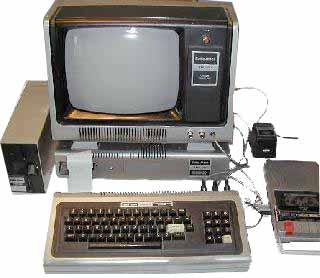
      Before I even address this quote, I should probably provide a disclaimer that I'm a gamer.  I've been playing computer games since the 80's on my father's old (and to me, beloved) TRS-80, and have played different games as the offerings evolved from single-player games, to 6-player online groups to full-fledged Massively Multiplayer Online Role-Playing Games.  In short, I like to think that I’m fairly familiar with video games.    
   Firstly, I disagree with Prensky’s assertion that video games “provide learning opportunities every second, or fraction thereof.”  Games have cycles, or rounds, and learning just doesn’t happen all the time.  For example, in an MMORPG, it’s common for a player to go out and gather resources.  There’s usually no learning going on here, it’s repetitive, and players do it in order to have resources they can use to advance their character: to make in-game money, or to improve their crafting skills.  At high levels, players repeat dungeons over and over.  Again, there’s no learning going on, the players are hoping to find special gear that will make their characters stronger.
Second, I’ll disagree that kids play video games for the learning experiences.  It’s true that a lot of learning that goes on while playing games – first the rules, what skills/moves a player can use, what combinations will (and will not) work depending on the various challenges.   However, if I refer back to those non-learning activities of the previous paragraph: gathering resources can be relaxing.  Doing dungeons often happens with a group of friends, and they’re exciting.  In addition, many players also talk to each other in real time as they play, using Skype-like programs, so that it becomes a social activity as well.  In the end, I believe that kids (and adults) play games because they are fun.  

    Dave Guymon wrote a blog post in February of 2014 in which he talked about the 5 elements that make games fun.  Here is his list:

1. Goals are achievable without being too easy
2. All participants have a similar chance of winning.
3. The risk of failure is present, but not overwhelming. 
4. Positive feedback occurs during the process.
5. There exists negative feedback as well.

   I agree with all of these points.  Another word I’d use for the first point is the following: Challenge.  When things are too easy, it gets boring, and we disconnect.  Whereas when we need to push ourselves, we engage more.  We can even relate this back to Krashen’s input hypothesis of i+1, where students improve their skills by listening to language which is just slightly beyond their current level, thereby challenging them. * 

     I think we can take Guymon’s list, and apply it directly to the classroom, either to gamify activities or create game-based learning to create a more realistic combination of Prensky’s enthusiasm for games and learning.   In fact, I think Guymon’s ideas lend themselves beautifully to creating an engaging classroom environment:

  • the learning goals should be “achievable without being too easy” 
  • every member of the class should have a “similar chance of [succeeding]”
  • students can fail, but it shouldn’t be “overwhelming”
  • there should be “positive feedback,” during the process
  • there should be “negative feedback:” feedback that lets a student know that what s/he is doing isn’t working or isn’t correct

To return to Prensky, I do think that games can be useful in the classroom, and that games can give us some ideas of how we can engage our students more.  I’m just not sure that Prensky completely understands video games or that his ideas of why kids like them are on target.    


* I remembered this from grad school.  Wikipedia also has a nice explanation here.

Thursday, February 4, 2016

Teaching Culture: a Reflection on a Quote

“Teaching culture is not an easy task, and many teachers feel that they do not know the culture they need to teach well enough to be an expert in the classroom.” 
Sabine Levet, FLTMAG, July 2013


     In many ways I agree with Sabine Levet's quotation.   I find teaching culture a daunting task, especially when the country we're covering (a different one for each chapter of our textbook), is one with which I'm not very familiar.    That being said, I do think that we owe it to our students to try to find real examples of the practices, products and perspectives of each country, so that our students can, at the very minimum, get a sense of the culture there.  Language doesn't exist in a vacuum, and our students need to understand the cultures of the Spanish-speaking world at the very least in a general way so that they can have a better chance of engaging successfully with native Spanish speakers when they travel.    

   One thing that I notice is Levet's phrasing: she calls it "teaching culture."  When we express it that way, we teachers put the onus on ourselves - that we have to be the ones who know all, so that we can impart that information to our students.    Yet when I remind myself that I don't necessarily have to "teach culture," that is, with a teacher-centered lecture model, the task becomes a bit less threatening.  When it comes to discussing countries I haven't visited, instead of trying to lecture, I look for realia from those countries, and try to let those materials do the teaching.  I then put together materials that will ask the students to think about those countries, customs, and products so that they can make their own observations and learn about the countries that way.   

    For me, the most challenging aspect of teaching culture is time and finding the right materials. For example, in Vistas Lección 15, the country of that chapter is Bolivia.  The vocabulary of the chapter is health and well-being.   Therefore in order to make everything come together, I spent hours hunting down realia from Bolivia about health and wellness.    Then, once I found the materials I wanted, I needed to figure out how and when to use them...and then create the supplementary materials.    I needed time to find the products I wanted (in this case, a series of health videos from the Ministerio de Salud), I needed to do it early in the term, so I could figure out just when to use the videos, and then time to also create the activities around those videos.

    I'm not entirely sure that native speakers have an advantage in this regard, especially Spanish speakers.  There are over twenty countries where people speak Spanish, and their cultures are all different.   An example I use with my students to describe the differences between Spain Spanish and Latin American Spanish is that of a native English speaker from the United States and a native English speaker from England.   They're both native speakers, however there are differences (sometimes significant ones) in culture and vocabulary.   In addition, a native Spanish speaker may not be able to identify what a student born in the United States would see as "other."    

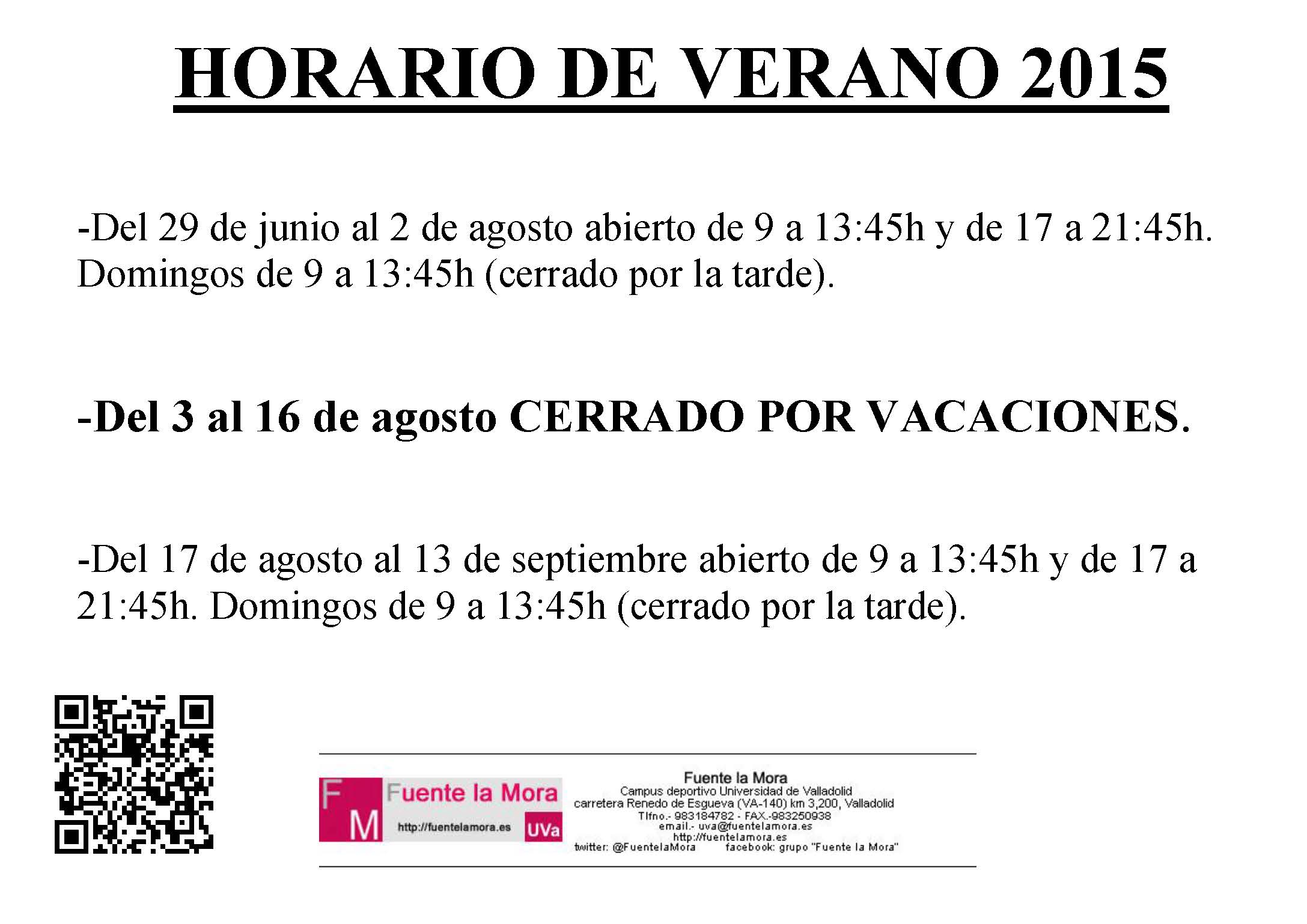
    For me, technology is what allows me to teach culture in a (hopefully) more engaging way.  Thanks to YouTube, I can show students real health videos which are geared towards native Bolivians.  Earlier this week, students in my Advanced Spanish (4th year) class read a story called "La tortilla." and at the start of class, I asked them to open their laptops and find out how to make a tortilla.   We watched a short 3-minute, walkthrough of how to prepare a tortilla - a video created by a Spaniard.   Then, we discussed when one might eat a tortilla, and used a sign posted by the Universidad de Valladolid to examine the Spanish daily schedule.   I find that my students appreciate seeing things that are real, and I'd like to think that they walked out of that class with a much better understanding of life in Spain.   Technology becomes a window into those other countries - it lets us into their kitchens, lets us check out a gym schedule, and with Google Street View, it even lets us walk down the street in Madrid.     I think without the web and these interactive tools, I'd be limited to whatever resources provided by my textbook.

Thursday, January 28, 2016

¡Bienvenid@! Welcome to my blog!


¡Hola!   Welcome to my blog!  My name is Eli and I teach Spanish at a private day and boarding school located in central New Jersey.  I've both taught and been at this school since 1997.
   I've always loved technology and have very fond memories of playing with our first home computer (a TRS-80).   To me, using technology and web tools just seems to be a natural extension of teaching language.   I regularly use the web to find authentic Spanish online and to share it with my students.  In addition, my students use different devices and web tools to practice using their Spanish and to receive feedback.   I'm looking forward to learning to use new tools, or new ways to use tools I'm already familiar with, and I'm excited to share that journey with you!