Thursday, February 25, 2016

Reflections on a Quotation from Prensky

What attracts and “glues” kids to today’s video and computer games is neither the violence, or even the surface subject matter, but rather the learning the games provide. Kids, like and all humans, love to learn when it isn’t forced on them. Modern computer and video games provide learning opportunities every second, or fraction thereof.    (Prensky, 2003)
      Before I even address this quote, I should probably provide a disclaimer that I'm a gamer.  I've been playing computer games since the 80's on my father's old (and to me, beloved) TRS-80, and have played different games as the offerings evolved from single-player games, to 6-player online groups to full-fledged Massively Multiplayer Online Role-Playing Games.  In short, I like to think that I’m fairly familiar with video games.    
   Firstly, I disagree with Prensky’s assertion that video games “provide learning opportunities every second, or fraction thereof.”  Games have cycles, or rounds, and learning just doesn’t happen all the time.  For example, in an MMORPG, it’s common for a player to go out and gather resources.  There’s usually no learning going on here, it’s repetitive, and players do it in order to have resources they can use to advance their character: to make in-game money, or to improve their crafting skills.  At high levels, players repeat dungeons over and over.  Again, there’s no learning going on, the players are hoping to find special gear that will make their characters stronger.
Second, I’ll disagree that kids play video games for the learning experiences.  It’s true that a lot of learning that goes on while playing games – first the rules, what skills/moves a player can use, what combinations will (and will not) work depending on the various challenges.   However, if I refer back to those non-learning activities of the previous paragraph: gathering resources can be relaxing.  Doing dungeons often happens with a group of friends, and they’re exciting.  In addition, many players also talk to each other in real time as they play, using Skype-like programs, so that it becomes a social activity as well.  In the end, I believe that kids (and adults) play games because they are fun.  

    Dave Guymon wrote a blog post in February of 2014 in which he talked about the 5 elements that make games fun.  Here is his list:

1. Goals are achievable without being too easy
2. All participants have a similar chance of winning.
3. The risk of failure is present, but not overwhelming. 
4. Positive feedback occurs during the process.
5. There exists negative feedback as well.

   I agree with all of these points.  Another word I’d use for the first point is the following: Challenge.  When things are too easy, it gets boring, and we disconnect.  Whereas when we need to push ourselves, we engage more.  We can even relate this back to Krashen’s input hypothesis of i+1, where students improve their skills by listening to language which is just slightly beyond their current level, thereby challenging them. * 

     I think we can take Guymon’s list, and apply it directly to the classroom, either to gamify activities or create game-based learning to create a more realistic combination of Prensky’s enthusiasm for games and learning.   In fact, I think Guymon’s ideas lend themselves beautifully to creating an engaging classroom environment:

  • the learning goals should be “achievable without being too easy” 
  • every member of the class should have a “similar chance of [succeeding]”
  • students can fail, but it shouldn’t be “overwhelming”
  • there should be “positive feedback,” during the process
  • there should be “negative feedback:” feedback that lets a student know that what s/he is doing isn’t working or isn’t correct

To return to Prensky, I do think that games can be useful in the classroom, and that games can give us some ideas of how we can engage our students more.  I’m just not sure that Prensky completely understands video games or that his ideas of why kids like them are on target.    


* I remembered this from grad school.  Wikipedia also has a nice explanation here.

Thursday, February 4, 2016

Teaching Culture: a Reflection on a Quote

“Teaching culture is not an easy task, and many teachers feel that they do not know the culture they need to teach well enough to be an expert in the classroom.” 
Sabine Levet, FLTMAG, July 2013


     In many ways I agree with Sabine Levet's quotation.   I find teaching culture a daunting task, especially when the country we're covering (a different one for each chapter of our textbook), is one with which I'm not very familiar.    That being said, I do think that we owe it to our students to try to find real examples of the practices, products and perspectives of each country, so that our students can, at the very minimum, get a sense of the culture there.  Language doesn't exist in a vacuum, and our students need to understand the cultures of the Spanish-speaking world at the very least in a general way so that they can have a better chance of engaging successfully with native Spanish speakers when they travel.    

   One thing that I notice is Levet's phrasing: she calls it "teaching culture."  When we express it that way, we teachers put the onus on ourselves - that we have to be the ones who know all, so that we can impart that information to our students.    Yet when I remind myself that I don't necessarily have to "teach culture," that is, with a teacher-centered lecture model, the task becomes a bit less threatening.  When it comes to discussing countries I haven't visited, instead of trying to lecture, I look for realia from those countries, and try to let those materials do the teaching.  I then put together materials that will ask the students to think about those countries, customs, and products so that they can make their own observations and learn about the countries that way.   

    For me, the most challenging aspect of teaching culture is time and finding the right materials. For example, in Vistas Lección 15, the country of that chapter is Bolivia.  The vocabulary of the chapter is health and well-being.   Therefore in order to make everything come together, I spent hours hunting down realia from Bolivia about health and wellness.    Then, once I found the materials I wanted, I needed to figure out how and when to use them...and then create the supplementary materials.    I needed time to find the products I wanted (in this case, a series of health videos from the Ministerio de Salud), I needed to do it early in the term, so I could figure out just when to use the videos, and then time to also create the activities around those videos.

    I'm not entirely sure that native speakers have an advantage in this regard, especially Spanish speakers.  There are over twenty countries where people speak Spanish, and their cultures are all different.   An example I use with my students to describe the differences between Spain Spanish and Latin American Spanish is that of a native English speaker from the United States and a native English speaker from England.   They're both native speakers, however there are differences (sometimes significant ones) in culture and vocabulary.   In addition, a native Spanish speaker may not be able to identify what a student born in the United States would see as "other."    

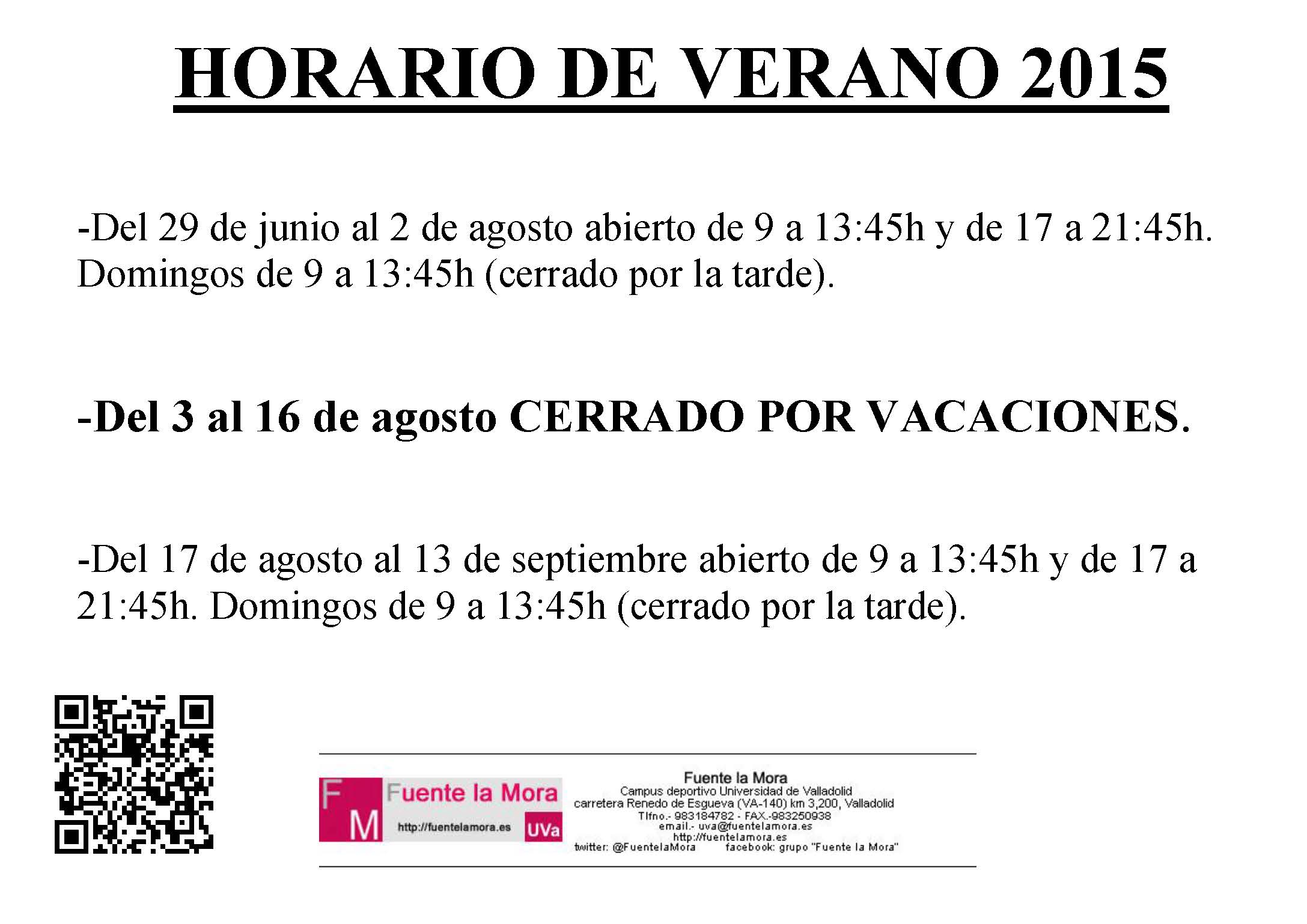
    For me, technology is what allows me to teach culture in a (hopefully) more engaging way.  Thanks to YouTube, I can show students real health videos which are geared towards native Bolivians.  Earlier this week, students in my Advanced Spanish (4th year) class read a story called "La tortilla." and at the start of class, I asked them to open their laptops and find out how to make a tortilla.   We watched a short 3-minute, walkthrough of how to prepare a tortilla - a video created by a Spaniard.   Then, we discussed when one might eat a tortilla, and used a sign posted by the Universidad de Valladolid to examine the Spanish daily schedule.   I find that my students appreciate seeing things that are real, and I'd like to think that they walked out of that class with a much better understanding of life in Spain.   Technology becomes a window into those other countries - it lets us into their kitchens, lets us check out a gym schedule, and with Google Street View, it even lets us walk down the street in Madrid.     I think without the web and these interactive tools, I'd be limited to whatever resources provided by my textbook.